Table of contents
Forestry and land clearing have seen remarkable advancements thanks to powerful telescopic technology. This innovation has revolutionized the way professionals approach tasks once considered labor-intensive and time-consuming. Explore how these technological breakthroughs are setting new standards for efficiency, safety, and environmental responsibility in forestry operations.
Enhanced reach and precision
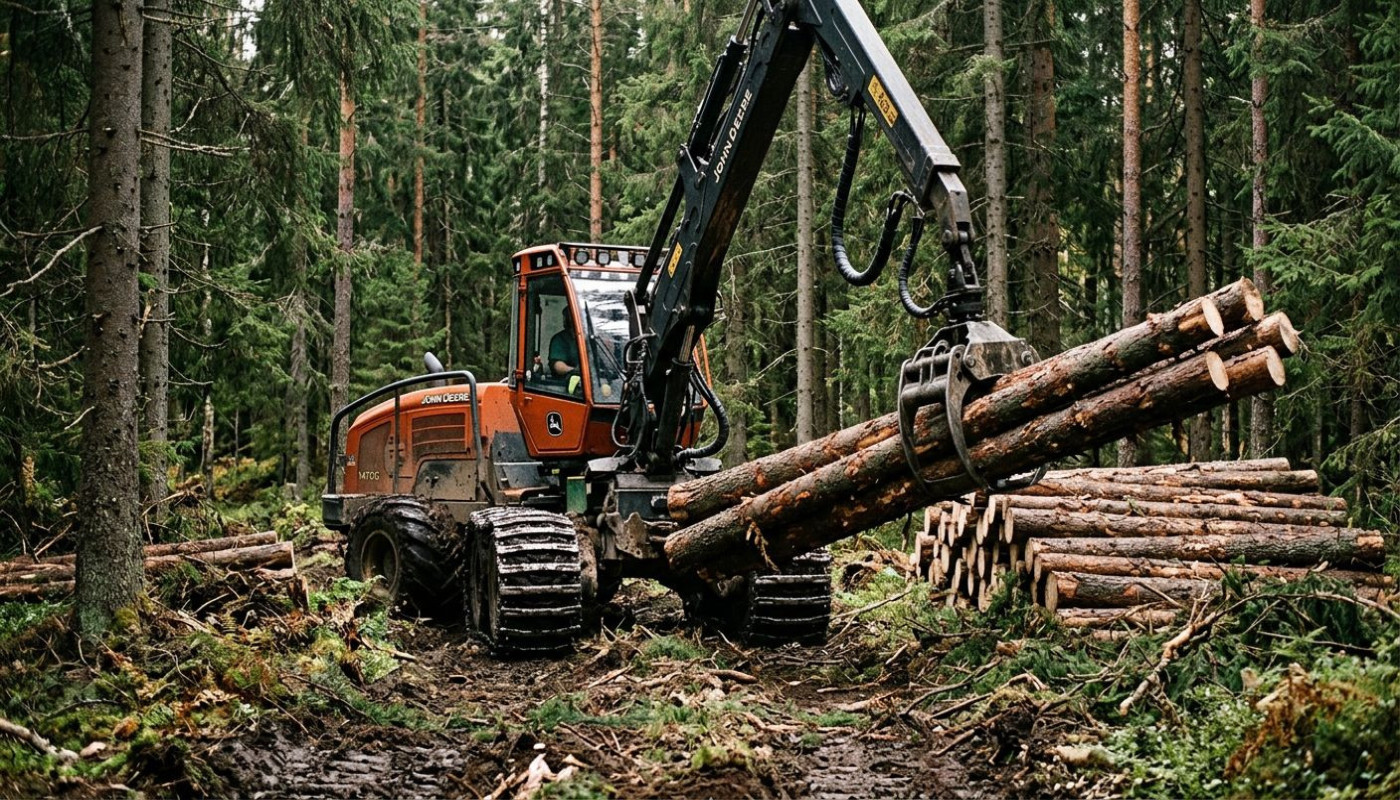
Telescopic technology has revolutionized forestry machinery, particularly with features such as the telescopic boom and articulated boom. By extending equipment reach, these innovations enable forestry professionals to access high branches or dense clusters in remote areas that were previously unreachable with standard machines. This advancement ensures that operators can perform tree removal, felling, and precision trimming tasks without needing to reposition large equipment or navigate treacherous terrain, minimizing environmental impact and improving overall safety. Enhanced control over boom articulation further provides operators with the dexterity required for accurate cuts and careful handling of heavy branches, reducing the risk of accidental damage to desirable flora or property. The result is not just increased productivity, but a streamlined, safer workflow that benefits both the operator and the surrounding ecosystem. For those in the industry interested in exploring advanced forestry equipment or learning more, click now for detailed information and solutions tailored to forestry and land clearing needs.
Boosted equipment efficiency
Telescopic technology significantly elevates the operational efficiency of forestry and clearing equipment through its innovative design and robust capabilities. By integrating telescopic handlers equipped with advanced hydraulic systems, forestry professionals can rapidly adjust the length and reach of machinery to suit various terrain and project demands. This adaptability minimizes the need for multiple machines and extensive repositioning, thus reducing downtime during clearing operations. The ability to extend or retract equipment on demand ensures consistent load capacity management, allowing operators to move heavier loads efficiently without overtaxing the system. Furthermore, modern hydraulic systems incorporated within telescopic handlers offer smooth, precise motion control, which enhances safety and reduces wear on components, resulting in less frequent equipment maintenance requirements.
With increased throughput and flexibility, telescopic handlers streamline workflows in dense environments where maneuverability and speed are vital. The versatility offered by telescopic mechanisms makes it possible to handle a variety of tasks—such as lifting logs, clearing debris, or reaching difficult areas—without interrupting the workflow. Enhanced operational efficiency also leads to improved resource allocation, as machines spend less time idle or undergoing maintenance thanks to the durability and performance of hydraulic systems. In forestry, where meeting project deadlines and managing costs are paramount, these technological advancements directly impact the overall success and sustainability of clearing operations.
Improved operator safety
Telescopic equipment has revolutionized forestry safety by substantially enhancing operator protection and reducing the risk of accidents during clearing operations. With advanced stabilization systems, these machines maintain superior balance and control, minimizing hazards associated with uneven terrain or shifting loads. Remote control capabilities allow operators to manage equipment from a safe distance, significantly lowering their exposure to falling debris, hazardous machinery, and unpredictable environmental conditions. Maintaining a safer working perimeter not only boosts accident prevention but also ensures compliance with strict forestry safety regulations. By integrating telescopic technology, forestry professionals can confidently approach challenging sites while prioritizing both efficiency and the well-being of every operator involved.
Environmental impact reduction
Telescopic technology is revolutionizing sustainable forestry by enabling eco-friendly machinery to operate with far less disruption to natural habitats. The compact design and extended reach of telescopic equipment allow operators to access and harvest timber without creating wide access roads or clearing large swathes of forest, which helps achieve minimal impact on delicate ecosystems. This targeted approach, known as selective clearing, enables forestry professionals to remove only specific trees while preserving surrounding vegetation and soil integrity. By reducing the need for heavy machinery to traverse forest floors, the risk of soil compaction—a major factor in long-term land degradation and reduced forest regeneration—is significantly lowered. These technical advancements support responsible land management practices that prioritize land preservation and the maintenance of biodiversity, making telescopic technology a key driver in the shift toward more sustainable and low-impact forestry operations.
Adaptability to diverse terrains
Telescopic technology has significantly enhanced the capabilities of all-terrain equipment in forestry operations, providing a reliable solution for professionals facing diverse forestry challenges. Modern adaptable machinery equipped with advanced slope handling features and chassis articulation can navigate steep gradients and rugged landscapes with remarkable efficiency. This adaptability enables operators to maintain stability and control, even when working on uneven ground or maneuvering through dense forests. Chassis articulation is especially valuable, as it allows the machinery to flex and conform to the terrain, reducing ground pressure and ensuring safer, smoother movement in challenging environments. The result is a versatile approach to forestry tasks, reducing downtime and improving productivity across various landscape types.
Versatile equipment fitted with telescopic booms and articulated frames is rapidly becoming the standard for handling dynamic forestry demands. The ability to adjust to different environmental conditions not only boosts efficiency but also minimizes the impact on sensitive ecosystems, promoting responsible land management. Operators benefit from increased reach and flexibility, making it possible to clear vegetation, transport logs, and conduct maintenance tasks in previously inaccessible areas. This technological evolution empowers forestry teams to adapt to unpredictable weather and ground conditions, supporting effective long-term management strategies across a wide range of terrains.
On the same subject

Exploring The Integration Of Automated Chat Platforms With AI Technologies

The Science Behind Honeycomb Paperboard: Production and Applications

How to choose the best offshore dedicated server provider to ensure the privacy and security of your data ?

How to train your chatbot GPT to enhance user experience?
